The toilet flushes slowly but never fully clogs. What is going on?
The toilet flushes, the bowl drops slowly, and it creeps back up before settling. It never fully clogs, so it is easy to ignore. Do not ignore it.
A slow flush means something is partly in the way. There are three common causes. First, the trap or the pipe just past it is narrowed by paper, wipes, or grease and soap scale on the pipe wall. Second, the vent stack on the roof is partly blocked, so air cannot follow the water down. You may hear gurgling or see the bowl bubble. Third, the branch line is bellied, or has roots at a joint, and water moves through it slowly.
Check one thing first: is it only this toilet, or are the tub, sink and other toilets slow too? One slow fixture points to that fixture's branch. Slow everywhere points to the main line or lateral, which is a different job with different equipment.
Safe homeowner check: use a plunger, stop flushing wipes, and watch whether it comes back. Stop running water and call now if other drains gurgle when you flush, water rises in a tub, or there is a sewage smell in the house.
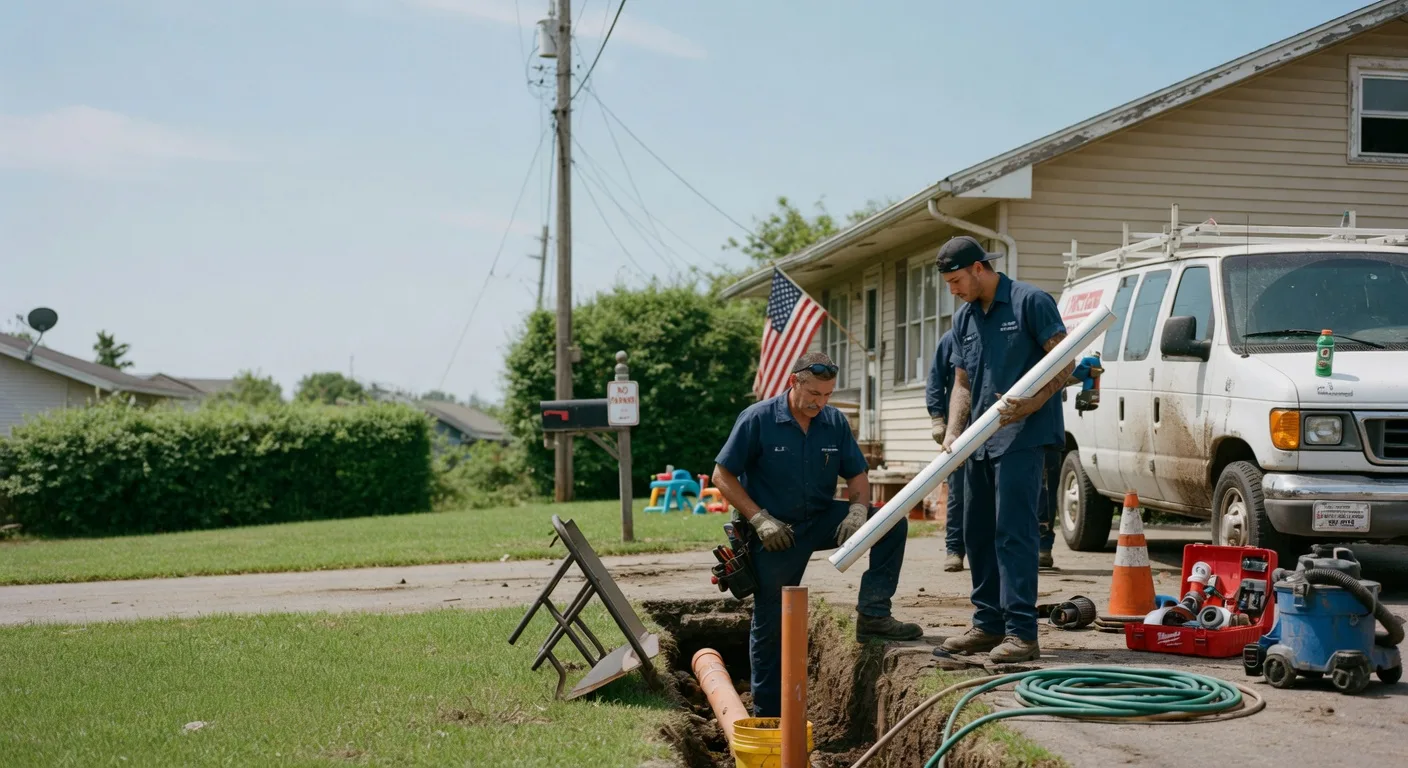
A cable machine usually clears a single branch. Recurring slowness, roots or grease often call for hydro jetting, and a camera inspection shows which. Expert Plumbers Co is a referral service. Call (380) 262-9173 to be connected with a plumber in Millinocket, ME for Drain Cleaning.
A slow flush that gets worse over a few weeks is a sign that the cause is growing, not stable. If the water is also making a gulp or a bubble in a nearby sink or tub when you flush, that points toward air being pulled through a trap, which is the vent stack problem. Check whether the slowness is worse during heavy rain or after the washing machine runs, because that tells the plumber whether the main line is filling up. Do not keep adding more water in the hope that the extra weight will push the blockage through, since it can drive waste up into the lowest opening. Tell the plumber if the toilet was recently moved, replaced or fitted with a water-saving model, because a low-flow toilet on an old line with little fall can leave solids behind. In older homes, the toilet branch is often a long run with a modest slope, which makes it more likely to hold debris.
My bathroom sink drains slowly but the stopper is clean. What else could it be?
If you have pulled the stopper and cleaned off the hair and soap film and the sink still drains slowly, the restriction is further down. The stopper mechanism is only the first few inches. Most of the slowdown lives in the pivot rod area, the tailpiece, the trap, or the pipe beyond it.
The common cause is a layer of soap scum, toothpaste and hair that binds together on the pipe wall. It narrows the pipe a little each month, and the sink slows long before it stops.
Safe checks you can do: set a bucket under the sink and unscrew the trap. Clear out what you find and rinse it. Look at the short pipe going into the wall for build-up you can reach with a bottle brush. Fill the basin and let it run, then watch whether the water drains evenly or with a gurgle. Skip chemical cleaners, which can soften plastic fittings and leave caustic liquid sitting in the trap.
Gurgling is a clue. A sink that drains slowly and gurgles can point to a blocked vent, because the drain cannot pull air behind the water. If the toilet or shower near that sink also acts up, the blockage may be in the shared branch line or the main drain, not the sink itself.
One slow sink with everything else normal usually means a local clog, and a cable machine through the trap arm is enough. If the pipe clears and slows again within a few weeks, a camera inspection can show whether the pipe wall is scaled over or has a sag that holds water. Heavy scale or soap buildup in the branch line may call for hydro jetting.
Call and stop using the sink if you see water leaking from the trap or the wall, if sewage smells from the drain, or if several drains in the house slow at once. That pattern usually means the main line is partly blocked.
Cost depends on how easy the pipe is to reach, whether the cleanout is nearby, how far the plumber must run the cable, and whether any worn pipe has to be replaced.
Expert Plumbers Co can connect you with an independent local plumber in Millinocket, ME when you call (380) 262-9173.
The laundry sink in my basement fills up when someone uses the drains upstairs. Why?
A basement laundry sink is often one of the lowest open drains in the house. When it fills with water from upstairs, that water is coming back up the main drain because the line below is blocked or too slow to carry it away.
Everything upstairs drains down through a vertical stack and into the main line that leaves the house. If that main line is partly blocked by roots at a clay joint, a bellied section holding water, or grease and wipes that have built up, the flow stops short and rises to the lowest point. That is the basement.
Check whether the floor drain, a basement toilet or a shower shows the same thing. If the laundry sink fills when you flush an upstairs toilet or run the washing machine, the main drain is the likely cause. If it only happens with the dishwasher or one bathroom, the blockage may be on a branch line instead.
Safe checks you can do: stop running water in the house for an hour and see whether the level drops. Find the cleanout, a capped pipe near the floor or outside wall, and note where it is for the plumber, but do not open it while the line is full. Do not run the washing machine or take showers to test it, and do not use chemical cleaner.
Stop all water use and call now if the water in the sink is dirty or smells, if it is rising, or if it spills over the rim. Sewage in a basement is a health hazard, so keep people and pets away and do not touch it without gloves.
A cable machine can clear a soft blockage in the main line from the cleanout. If it returns, or if the cable stops at the same spot, a camera inspection shows whether roots, a bellied pipe or a failed sewer lateral is behind it. Hydro jetting clears grease and roots more thoroughly than a cable, and a damaged line may need a repair or replacement section.
Cost depends on access to the cleanout, how far the blockage sits, whether roots or a collapsed pipe are involved, and how much has to be dug or opened.
Expert Plumbers Co can connect you with an independent local plumber in Millinocket, ME when you call (380) 262-9173.
The plumber cleared my line but said the pipe itself has a problem. How do I make sense of the options he lays out?
It is a letdown to pay for a cleared drain and then hear that the pipe is the real trouble. It is also useful information, as long as you understand what you are being offered.
Start by asking what the problem actually is. Common answers include roots entering a clay joint, a bellied section that holds water, a cracked or collapsed pipe, heavy scale in cast iron, or a joint that has pulled apart. Each one has a different fix, and each one has a different level of urgency.
Ask how the plumber knows. The strongest answer is a camera inspection you can watch. If the opinion came from the feel of the cable alone, a camera look is a fair thing to request before spending a lot of money.
Then ask for the options in a clear order, from least to most work.
Keep clearing it on a schedule. This suits roots or grease when the pipe is otherwise sound. It does not fix the pipe, so ask how often it would likely be needed.
Spot repair. A short section is cut out and replaced. This suits one crack or one bad joint, and depends on how deep it is and what has to be dug up.
Trenchless lining or pipe bursting. A new liner or pipe is pulled through the old one with less digging. It depends on the pipe's condition and the line layout.
Full replacement. The failed line is dug up and replaced. This is the most disruptive choice and usually the last resort.
For each, ask what happens if you wait. A small root problem may give you months. A collapse usually does not.
Cost depends on how deep the pipe is, how much has to be opened up, what is above it, such as a driveway or a slab, the materials, and permits under local code. Ask the plumber to put the scope in writing so another plumber can price the same job.
You are allowed to take time and get a second opinion, especially if the pipe is not backing up today.
If you need a drain cleared in Millinocket, ME, Expert Plumbers Co can connect you with an independent local plumber at (380) 262-9173.
Will baking soda and vinegar, or a kettle of boiling water, clear a slow drain?
You have a slow drain, so you tried baking soda and vinegar, or a kettle of boiling water. It still crawls, or the clog is back by morning. That is the usual result.
The fizz is mild. It can freshen a drain, but it does nothing to a solid clog of hair, soap scum, grease or paper. Boiling water melts grease for a moment, then the grease cools and sets again further down the pipe, where it is harder to reach. Boiling water can also soften PVC joints and crack porcelain. Hot tap water is safer than a kettle.
The real causes sit deeper: grease build-up on the pipe wall, scale in old cast iron, roots entering a clay joint on the main, or a bellied line that holds water and solids at its low point. A blocked vent stack can also make a drain sluggish and gurgling, which looks like a clog but is an air problem.
Count the affected drains. One slow fixture usually means a hair, soap or grease clog in that fixture or its branch. If the tub, sinks and toilets all run slow together, or you hear gurgling after a flush, the trouble is in the main line or vent, and no kitchen remedy will reach it.
Safe homeowner check: Remove the stopper or strainer and clear hair and residue by hand. Try a plunger with a good seal. Run hot tap water, not boiling. Check whether other fixtures are slow. Avoid stacking store-bought chemical cleaners, which can sit in a standing pipe.
Stop running water and call now if more than one fixture is backing up, if dark water is rising in a tub or floor drain, if you smell sewage, or if water comes up when you flush or drain the washer.
A cable machine is usually enough for a clog in a single branch. Hydro jetting is the better tool when grease or scale coats the pipe wall. A camera inspection is the right step when the drain clears and slows again within days, since that pattern points to a belly, roots or a damaged section.
Expert Plumbers Co is a referral service. We connect you with an independent local plumber in Millinocket, ME. Call (380) 262-9173.
Tell the plumber what you already tried. Ask what they found in the line, not only that it was cleared. The scope depends on access to the pipe, whether a fixture has to be removed, the pipe material, and whether the cause is a simple clog or damage that needs repair.